Making Wellbeing More Accessible: Introducing Online Wellbeing Courses

Making Wellbeing More Accessible: Introducing Online Wellbeing Courses

At Isorropia Foundation, we believe everyone deserves the opportunity to develop the knowledge, skills and confidence to support their mental health and wellbeing.

Our workshops have always been about sharing practical tools, encouraging self-reflection and helping people make positive changes in their everyday lives. Now, we’re excited to take the next step in our journey by bringing this work to more people through a new series of online wellbeing courses.

Making Our Wellbeing Workshops More Accessible

We know that attending an in-person workshop isn’t always possible. Whether it’s due to time, location, personal circumstances or other commitments, there can be barriers that make accessing wellbeing support more difficult. That’s why we’re working towards making our Isorropia Foundation workshops accessible to more people, wherever they are.

By bringing our workshop topics into an online course format, we’re creating new opportunities for people to explore these subjects at their own pace, in their own time and in a way that fits around their lives.

Our online courses bring together the knowledge and practical activities from our workshops, helping learners develop their understanding and put what they learn into practice in everyday life.

Our First Online Course: The Art of Effective Communication

We’re delighted to announce the launch of our very first online course, The Art of Effective Communication!

Effective communication plays an important role in our everyday lives. It shapes how we build relationships, express ourselves, navigate challenges and understand one another. Yet communicating effectively doesn’t always come naturally, and developing these skills can make a meaningful difference to how we connect with others.

Through this course, we’re bringing the knowledge and practical activities from our Isorropia Foundation workshops into an accessible online format, allowing you to explore the topic at your own pace and in your own time.

With a series of bite-sized videos and accompanying worksheets, you’ll have the opportunity to:

    • Develop your understanding of effective communication.
    • Reflect on your own communication style and habits.
    • Explore practical ways to apply what you learn in everyday life.
    • Build skills that can support more positive and meaningful interactions with others.

Whether you’re looking to strengthen your relationships, develop greater self-awareness or feel more confident communicating with others, The Art of Effective Communication is a great place to start.

Just the Beginning...

The launch of our first online course marks an exciting milestone for Isorropia Foundation, but this is only the beginning!

Over the next year, we’ll be releasing more of our workshop topics in an online course format, creating further opportunities for people to develop skills that support their wellbeing.

We’re excited about the possibilities this creates and the opportunity to reach people who may not otherwise have been able to attend one of our in-person workshops.

Our vision is to make the knowledge, tools and insights shared through Isorropia Foundation accessible to a wider community, empowering more people to take positive steps towards their wellbeing, wherever they are.

Supporting Our Mission

As a non-profit organisation, our work is driven by a commitment to making wellbeing support and education accessible to more people.

Our online courses are priced at just £24.99 to keep them affordable and accessible, while also helping us generate income to support Isorropia Foundation’s work and wider mission.

By purchasing a course, you’re not only investing in your own learning and development, but also helping us to make the knowledge and skills shared through our workshops accessible to more people, wherever they are.

Explore Our Online Wellbeing Courses

We’re proud to be taking this first step towards making our workshops more accessible, and we look forward to sharing more online courses with you over the coming year.

If you’d like to develop your communication skills and discover practical ways to communicate more effectively, we’d love for you to join us.

Explore The Art of Effective Communication and take your first step towards more meaningful communication.
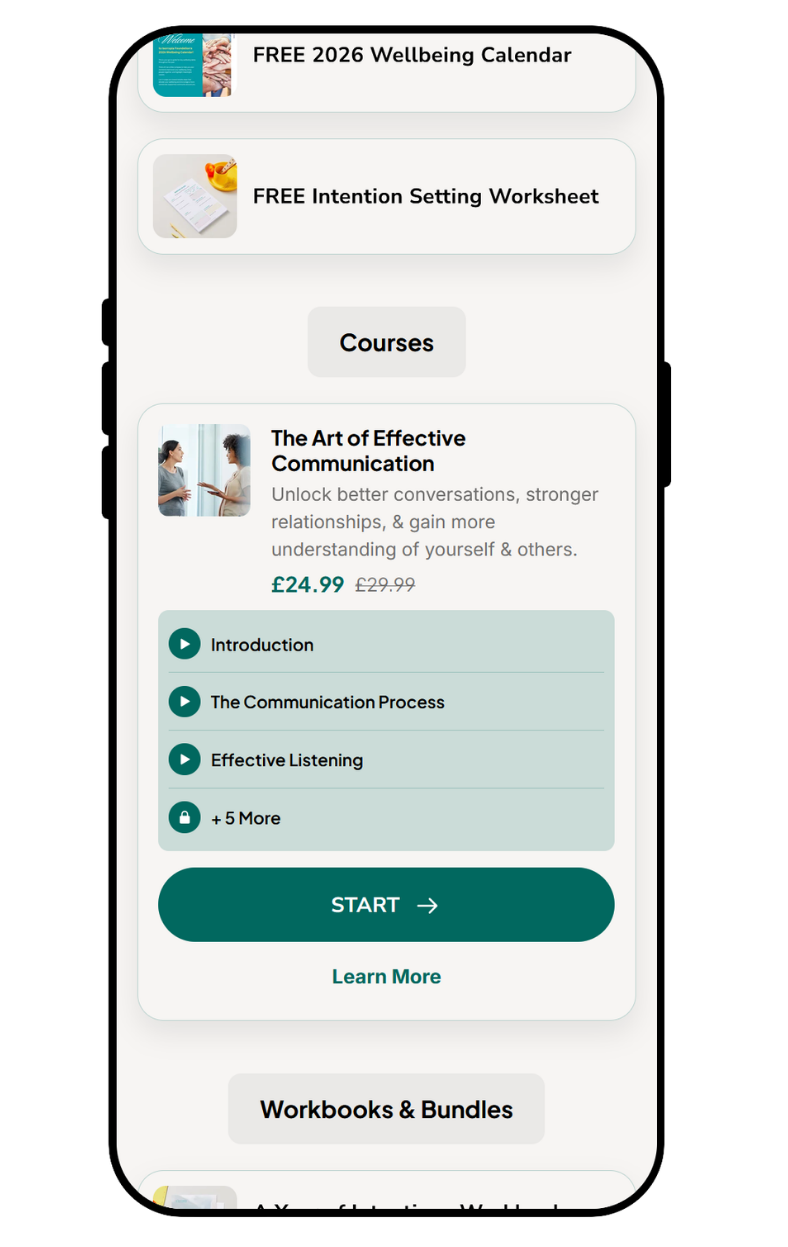
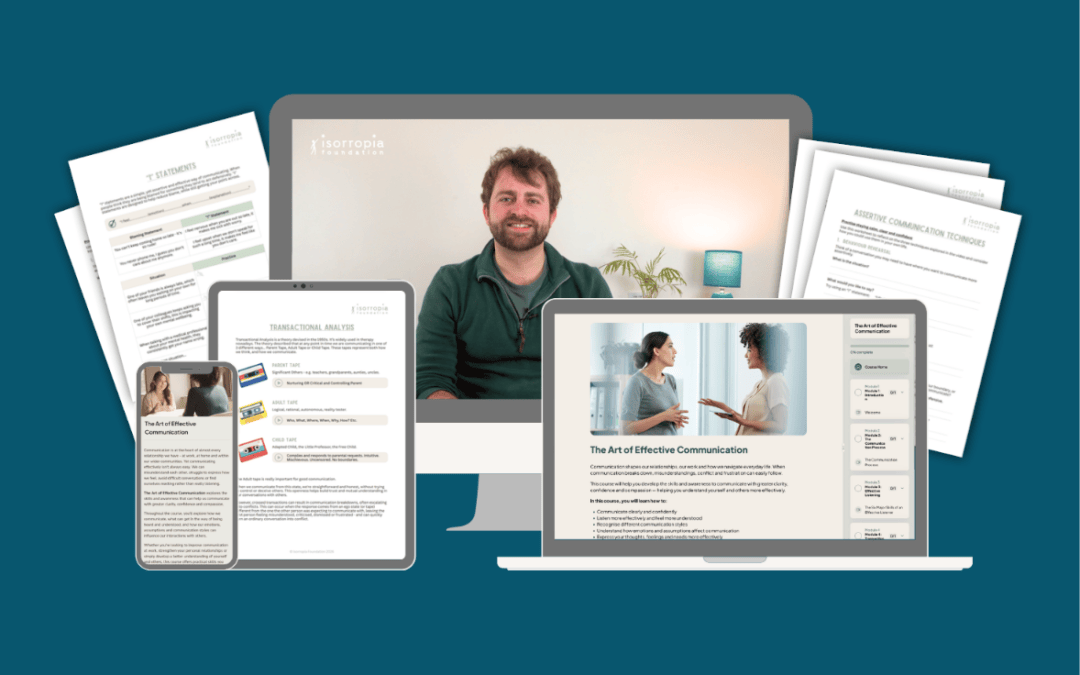
Mobile phone displaying Isorropia Foundation's online course.

Frequently Asked Questions About Our Online Wellbeing Courses

What are Isorropia Foundation's online wellbeing courses?

Our online wellbeing courses bring topics from Isorropia Foundation’s workshops into a flexible digital format, combining video lessons and practical worksheets to help people learn and reflect at their own pace.

Who are the Online Courses for?

Our online courses are designed for anyone who would like to improve their wellbeing, develop their skills, and learn at their own pace.

It’s particularly valuable for people who may not be able to attend our in-person workshops, whether due to work commitments, availability, or living outside the geographical areas we can currently accept referrals from.

It’s also ideal for anyone who has previously attended one of our workshops and would like a refresher – a little pocket-sized coach to revisit whenever they need it!

We often hear feedback from members saying, “I wish my friend or family member could do this!” Well, now they can!

Can I complete an online wellbeing course at my own pace?

Our courses are designed to offer a flexible way to learn, allowing you to work through the videos and accompanying worksheets in your own time.

What is The Art of Effective Communication course about?

The Art of Effective Communication is our first online course. It focuses on developing an understanding of effective communication and exploring practical ways to apply communication skills in everyday life.

Will Isorropia Foundation release more online courses?

Yes! Over the next year, we plan to release more of our workshop topics as online courses, helping make our resources accessible to a wider community.

How can I access the first online course?

You can find out more about The Art of Effective Communication and explore the course here:
Explore The Art of Effective Communication

Winter Wellbeing Tips: Simple Ways to Feel Good This Winter

Winter Wellbeing Tips: Simple Ways to Feel Good This Winter

As the days get shorter and the mornings darker, it can be tempting to hibernate until spring arrives. Getting out of bed suddenly feels like a full-time job, and our cosy blankets become very persuasive! But winter doesn’t have to be something we simply endure. With a few practical winter wellbeing tips, we can nurture our wellbeing and find moments of comfort, connection and joy.

Staying Connected in Winter: Relationships Matter

When it’s cold outside, cancelling plans and staying cosy at home can feel very appealing. But staying connected with others is an important part of our wellbeing, especially when shorter days and colder weather make socialising more difficult.

The 5-3-1 guideline offers one way to think about nurturing our social connections:

5

people to connect with each week: This could be a friend, colleague, neighbour, family member or someone you regularly chat to at your local café. Even a friendly conversation or thoughtful message is a good place to start.

3

close relationships to nurture: Think about the people you feel comfortable being yourself around. Make time to check in, arrange a catch-up or have an honest conversation about how you’re really feeling.

1

hour of social connection each day: This might mean sharing a meal with family, walking with a friend, calling someone you love or chatting with others at a group or community activity.

Think of this as a flexible guide, not a tick-box exercise. The aim is to maintain meaningful connections during winter, when some people may feel more isolated.

Three Healthy Habits for Winter Wellbeing

When winter leaves us feeling a little sluggish, small changes to our daily routine can help us feel more energised and balanced. Here are three simple winter self-care habits to try.

Get some daylight

Try stepping outside during your lunch break, even for ten minutes. Natural daylight helps regulate our body clock, which plays an important role in our sleep-wake cycle.

Move in ways you enjoy

You don’t need an intense gym session to benefit from movement. A brisk walk, a spot of dancing in the kitchen or some gentle yoga can all support your physical and emotional wellbeing.

Make room for the little things

Keep a regular sleep routine, enjoy nourishing meals and make time for things you enjoy, whether that’s reading a good book or meeting a friend for a cuppa.

November: A Month of Connection and Kindness

November offers some useful reminders to check in with ourselves and the people around us.

Movember encourages conversations about men’s health, including mental wellbeing. A simple “How are you, really?” can open the door to a more meaningful conversation with someone who might be struggling.

National Stress Awareness Day, on 4 November, is an opportunity to pause and notice when life is becoming overwhelming. Could you set a boundary, take a proper break or give yourself permission to say no?

World Kindness Day, on 13 November, reminds us that kindness doesn’t have to be grand. A thoughtful message, helping a neighbour or simply listening can strengthen our connections, and these small acts matter all year round.

How to Enjoy Winter: Flipping the Script

Let’s be honest: winter can be a bit of a slog. It’s dark when we get up and dark when we finish work, and suddenly putting the heating on feels like a major financial decision! But what if we flipped the script and viewed winter as an opportunity to slow down, rather than something to simply get through?

Winter can be a chance to embrace a gentler pace, reconnect with ourselves and make more room for the things that bring us joy. Think cosy evenings with a good book, leisurely walks in the crisp air, trying a new hobby or spending quality time with the people we love.

Try asking yourself: What would help me feel good today? It might be getting outside for some fresh air, catching up with a friend or simply giving yourself permission to take things a little slower.

By embracing the opportunities winter offers and finding small ways to look after ourselves, we can make the season feel more enjoyable and meaningful.

Winter Self-Care: A Little Goes a Long Way

Looking after our wellbeing during winter doesn’t have to involve a big lifestyle overhaul. Often, everyday choices make a difference: getting outside, reaching out to someone, moving our bodies or making time for something we enjoy.

As the colder months settle in, remember to be kind to yourself. You don’t have to make every day wonderful, but you can look for ways to make it brighter. After all, winter might just have more to offer than we think!

Ready to give your winter wellbeing a little boost?

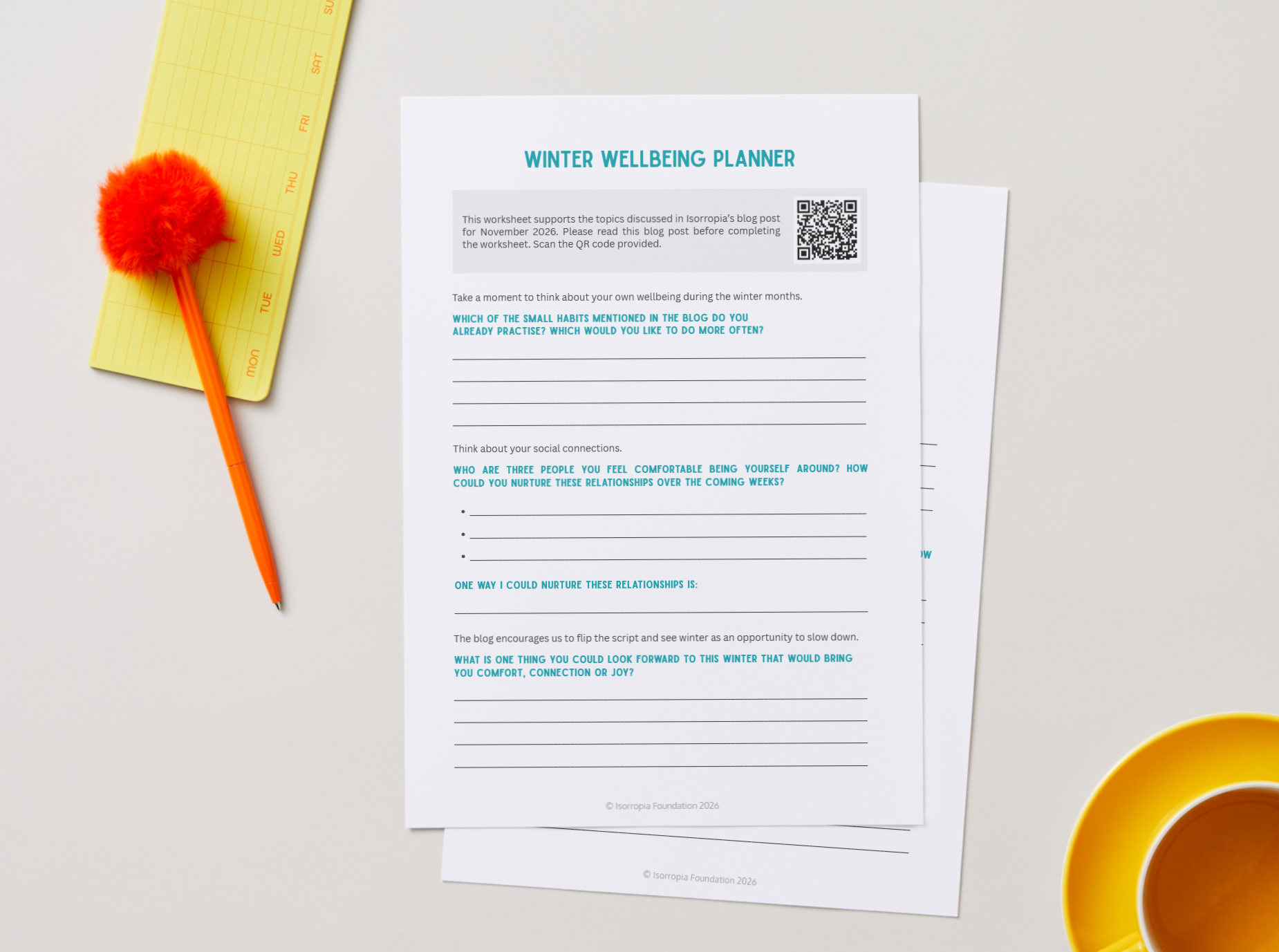
Our Winter Wellbeing Planner is designed to help you reflect on how you’re feeling, identify simple ways to look after yourself and plan small activities that bring you comfort, connection and joy. It’s a lovely way to turn the ideas in this article into practical steps that work for you.

Download your FREE Winter Wellbeing Planner and start making space for your wellbeing this winter.

Winter Wellbeing Planner worksheet to help support mental health, self-care and wellbeing during the colder months.

An Exciting New Chapter: Introducing Our Online Wellbeing Courses

At Isorropia Foundation, we believe everyone deserves the opportunity to develop the knowledge and skills to support their wellbeing. That’s why we’re excited to take the next step in our mission by bringing our workshops to more people through a new series of online courses.

We’re delighted to introduce our first course, The Art of Effective Communication. Combining bite-sized videos with practical worksheets, the course offers a flexible way to explore communication skills and put what you learn into practice in everyday life.

And this is just the beginning! Over the next year, we’ll be releasing more of our workshop topics as online courses, helping make our resources accessible to a wider community.

Ready to get started?

Mobile phone displaying Isorropia Foundation's online course.
Finding Your Flow: The Psychology of Optimal Experience

Finding Your Flow: The Psychology of Optimal Experience

Have you ever been so absorbed in something that you completely lost track of time? Finding your flow can happen when we’re doing something we genuinely enjoy, whether that’s getting creative, exercising, playing music, cooking, gardening, working or even having a conversation that we’re completely engaged in.

For a while, everything else seemed to disappear. You weren’t thinking about what happened earlier in the day or what you needed to do later – you were simply there, completely immersed in what you were doing.

Psychologist Mihaly Csikszentmihalyi described this experience as “flow” – a psychological state where we become deeply absorbed in an activity and experience a sense of focus, enjoyment and effortless involvement.

Flow is sometimes described as being in the “zone”. It is an example of what Csikszentmihalyi called an optimal experience: a state in which our attention is fully engaged, and we feel that we are using our skills and abilities in a meaningful and satisfying way.

And while we can’t necessarily switch flow on whenever we want, understanding what helps us experience it can teach us a lot about our attention, our habits and our wellbeing.

Person finding their flow through painting

What does it actually feel like to be in flow?

Flow is more than simply concentrating.

When we’re in flow, several things tend to happen at the same time. We become deeply focused on the task in front of us, distractions fade into the background, and we can become less aware of time passing.

The activity itself becomes rewarding. Rather than constantly thinking about the end result, we’re engaged in the process.

You might notice that:

    • Time seems to pass very quickly.
    • You’re completely absorbed in what you’re doing.
    • Your attention feels naturally focused.
    • You’re less aware of yourself or external distractions.
    • The task feels challenging, but achievable.
    • You have a clear sense of what you’re trying to accomplish.
    • You receive some form of feedback as you go.
    • You feel a sense of satisfaction from the activity itself.

Importantly, flow isn’t necessarily about being productive.

You can experience flow while working, but you can also experience it while painting, running, gardening, playing an instrument, building something, gaming or engaging in a hobby.

Flow is about engagement, not achievement.

Finding your flow: the sweet spot

One of the interesting things about flow is that the activity needs to provide the right level of challenge.

If something is far too easy, we might become bored. If something feels completely beyond our abilities, we may become overwhelmed or anxious.

Flow tends to occur somewhere in between – when we’re being challenged enough to stay engaged, while also having enough skill or support to feel that the task is manageable.

The “sweet spot” sits somewhere between the two.

This can be useful when we’re thinking about our own wellbeing. Sometimes, feeling stuck isn’t a sign that we need to push ourselves harder. We may simply need to adjust the challenge.

Could the task be broken down into smaller steps?
Could we learn a new skill?
Could we remove some distractions?
Could we give ourselves more time?

Creating the conditions for engagement can sometimes be more helpful than simply telling ourselves to “try harder”.

ADHD and flow

October is ADHD Awareness Month, making it a useful opportunity to think about attention in a slightly different way.

ADHD is often discussed in terms of difficulties with attention, but attention isn’t simply something that people either have or don’t have. For people with ADHD, attention can be strongly influenced by factors such as interest, novelty, challenge and reward.

This is one reason why someone with ADHD might become intensely absorbed in an activity they’re interested in, while finding it difficult to start or maintain attention on something that feels repetitive, uninteresting or overwhelming.

This intense absorption is sometimes referred to as hyperfocus. While hyperfocus and flow aren’t exactly the same thing, they can share similarities, including deep concentration and reduced awareness of what’s happening around us.

Understanding this can help challenge the idea that ADHD simply means someone “can’t concentrate”. The reality is more complicated. It can be less about an absence of attention and more about how attention is regulated.

Whether you have ADHD or not, our modern lives give our attention plenty of competition. Notifications, emails, social media, constant messages and the pressure to multitask can make it difficult to become deeply immersed in anything.

Sometimes the biggest distraction isn’t external at all. Our minds can be busy thinking about yesterday, worrying about tomorrow, replaying a conversation or running through our never-ending to-do list.

This is why creating the right conditions for focus can be so valuable – and those conditions may look different for everyone. For one person, it might mean putting their phone away and working in silence. For someone else, background music, movement or working alongside another person might make it easier to engage.

There isn’t one perfect way to find your flow.

We don’t need to eliminate every distraction or spend hours in perfect concentration. It might simply mean creating small pockets of time where we allow ourselves to become absorbed in something.

Could we create more opportunities for flow?

We can’t force ourselves into flow. But we can create conditions that make deep engagement more likely. You could try:

Put distractions out of reach

If your phone pulls your attention away, put it somewhere you can’t reach it. Even a short period of uninterrupted time can make a difference.

Find the right level of challenge

If something feels boring, could you make it more challenging? If it feels overwhelming, could you break it down?

Notice what makes you feel absorbed

Pay attention to the moments when you naturally lose track of time. What were you doing? Where were you? Who were you with? What made it enjoyable?

Choose something that interests you

Flow is much easier to find when we’re engaged with the activity itself. Think about the things that naturally absorb your attention.

Give yourself uninterrupted time

Even 20–30 minutes can be enough to become more immersed in an activity. You don’t necessarily need an entire afternoon.

These observations can give us clues about the environments and activities that support our wellbeing.

We don't always need to be more productive

There’s a tendency to talk about flow as a way of becoming more productive, efficient or successful. But perhaps there’s another way of looking at it.

In a world where our attention is constantly being pulled in different directions, being able to become fully present in something can be valuable in itself.

Flow reminds us that wellbeing isn’t only about reducing stress or managing difficult emotions. It can also involve experiencing engagement, enjoyment, curiosity and connection.

Sometimes the most beneficial thing we can do isn’t another item on our to-do list.

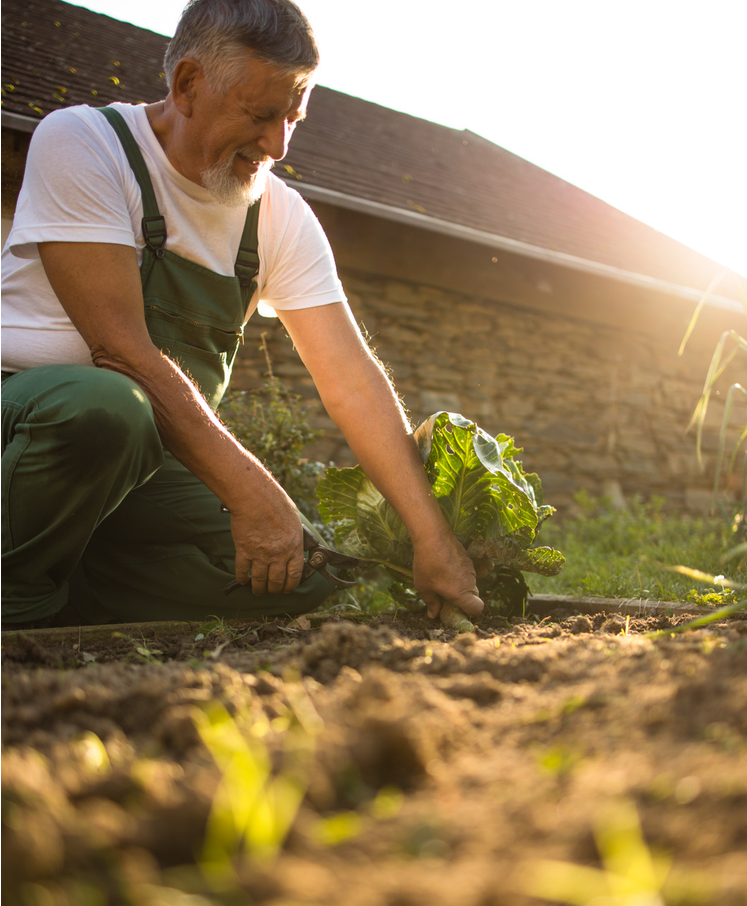
Finding your flow through a favourite hobby - man enjoying time gardening

It might be picking up a hobby, going for a walk, getting creative, playing music, cooking something from scratch, working with our hands or simply doing something that makes us forget to check the clock.

Finding your flow isn’t about being productive every minute of the day. It’s about discovering the activities and environments where you feel absorbed, engaged and fully present.

And perhaps, in a world that’s constantly competing for our attention, that’s something worth making space for.

Red Squirrel Chooses Isorropia: Shining a Light on Wellbeing

Red Squirrel Chooses Isorropia: Shining a Light on Wellbeing

We’re delighted to share some wonderful news this September: Isorropia Foundation has been chosen as Red Squirrel Property Shop’s Charity of the Month!

We’re incredibly grateful to the team at Red Squirrel for helping us shine a light on the work we do across the Isle of Wight – and, most importantly, helping us spread the word about the free wellbeing support available through Isorropia.

A Different Approach to Mental Health

Founded in 2018 by Vicki Haworth and Charlie Bell, both of whom previously worked within the NHS, Isorropia was created to fill a gap in mental health support on the Island.

Our focus is prevention – giving people practical tools and strategies to look after their wellbeing, build resilience and manage life’s challenges before they reach crisis point.

We believe everyone can benefit from learning more about their mental wellbeing, regardless of whether they have a diagnosis.

The Five Keys to Wellbeing

Everything we do is built around our Five Keys to Wellbeing:

  • Stability – creating a strong foundation.
  • Lifestyle – developing healthy and balanced habits.
  • Acceptance – learning to accept and let go.
  • Mindset – developing an open and positive outlook.
  • Meaning – connecting with purpose and what matters to us.

These aren’t simply ideas to think about. Our programmes turn them into practical tools that members can use in everyday life.

The Power of Connection

Our programmes are delivered through professionally facilitated group workshops.

For some people, joining a group can feel daunting at first. But there’s something incredibly powerful about discovering that you’re not alone.

Members don’t have to share personal experiences. They can simply listen, learn and participate at a level they’re comfortable with.

Alongside the practical tools, that sense of connection and belonging can make a huge difference to wellbeing.

Where Your Journey Can Begin

Our GIFT Foundation Course introduces members to the Five Keys to Wellbeing and encourages them to explore what matters to them, understand themselves better and identify meaningful goals.

Members can then continue onto a five-week follow-on programme to help turn those goals into positive, sustainable changes.

We also offer a wide range of CPD-accredited workshops covering topics such as anxiety, low mood, confidence, emotional regulation, relationships, communication, neurodiversity and wellbeing planning.

Members can choose the workshops that feel most relevant to them – because wellbeing isn’t one-size-fits-all.

Here for as Long as You Need

After completing the wellbeing programme, our members become part of the wider Isorropia community, where they can keep attending workshops, join wellbeing walks, and take part in community activities with us.

Life changes, and sometimes we all need a reminder of the tools that help us stay well.

Discover what we offer and explore what your journey as an Isorropia member could look like: CLICK HERE.

Help Us Spread the Word

Anyone aged 16 or over can access Isorropia, and there are no waiting lists. One of the biggest ways you can support our work is simply by spreading the word.

There are still many Islanders who don’t know that this free service exists. Sharing our information with a friend, family member or colleague could help someone take that first step towards better wellbeing.

A huge thank you to Red Squirrel Property Shop for choosing us as their Charity of the Month and helping us reach more people across the Island.

Together, we can help create a healthier, more connected Isle of Wight.

Happiness, Grief and Everything In Between

Happiness, Grief and Everything In Between

August often brings a change of pace, with school holidays in full swing and many children enjoying a break from school. For many, it is a month of connection, adventure and making memories. For others, it can be a challenging time as routines shift and emotions feel heightened.

Whether you’re enjoying time with family, taking a break, or simply trying to keep up with everyday life, August can also be an opportunity to pause and reflect on your own wellbeing.

This month, we’re exploring three important awareness themes that remind us to look after ourselves and those around us: finding joy in the everyday, making space for those experiencing grief, and challenging the stigma around addiction and overdose.

Happiness Happens Month

Throughout August, Happiness Happens Month encourages people to notice and share moments of happiness.

Sometimes, when life feels difficult, we stop noticing the good moments because they feel too small to matter. But small moments do matter. They can give the nervous system a break. They can remind us that life is not only the hard thing we are going through. They can help us build hope, one moment at a time.

As humans, we often feel the need to sort our emotions into neat boxes. We want to know which one is “the real one.” Am I happy or sad? Am I coping or struggling? Am I hopeful or scared?

Life is rarely just one emotion at a time. In reality, our emotional lives are far more layered than that. Emotional wellbeing is not about choosing one feeling and pushing the others away. It is about making space for the fact that we can feel many things at once.

We can experience happiness while carrying grief. We can need rest while juggling responsibilities. We can feel hopeful while still feeling uncertain. We can laugh with someone we love and still be quietly holding something painful underneath.

You might ask yourself:

    • What has made me smile recently?
    • Where do I feel most at ease?
    • Who helps me feel like myself?
    • What is one small thing I could do today that would feel kind to me?

This August, look for the flowers growing between the weeds. Life doesn’t have to be free of challenges for moments of joy, peace and hope to take root.

National Grief Awareness Day

The 30th of August marks National Grief Awareness Day, a reminder that grief is something we all experience, yet many of us still find it difficult to talk about.

When we think of grief, we often think of losing someone we love. But grief can also come from the loss of a relationship, changes in our health, family estrangement, addiction, redundancy, moving away, or letting go of the future we had imagined for ourselves. At its heart, grief is our response to losing something that mattered.

Grief is rarely predictable. It doesn’t follow a timeline or move neatly through stages. Instead, it comes in waves. One day you may feel able to laugh and enjoy life, and the next, a memory, place or song can bring the pain rushing back. It can show up as sadness, anger, numbness, anxiety, exhaustion, poor sleep or difficulty concentrating. Every person’s experience is different, and every response is valid.

When someone is grieving, we often worry about saying the wrong thing. In reality, people rarely need perfect words. What they usually need is to know they don’t have to carry their grief alone. Sometimes the simplest words are the most meaningful:

    • I’m thinking of you.
    • I don’t know what to say, but I’m here.
    • You don’t have to pretend with me.
    • Would you like to tell me about them?
    • Can I sit with you for a while?
    • Is there anything that’s feeling particularly heavy right now that you’d like to talk through?

Perhaps one of the greatest gifts we can offer is permission. Permission for grief to last as long as it needs to. Permission for someone to smile without feeling guilty, or to cry long after others expect them to have “moved on”. Most importantly, permission to be honest about how they’re feeling without worrying they’ll be judged, rushed or expected to hide their emotions. Grief doesn’t have a finish line, and compassion reminds us that it doesn’t need one.

International Overdose Awareness Day

Grief also reminds us of the importance of compassion, especially when loss is surrounded by stigma or misunderstanding. The 31st of August marks International Overdose Awareness Day, a global campaign to remember those who have lost their lives to overdose, acknowledge the grief of the families and friends left behind, and encourage open, compassionate conversations about addiction and recovery.

Addiction is complex and cannot be reduced to a simple explanation. There is rarely a single reason why someone develops a dependency; instead, it is often shaped by a combination of biological, psychological and social factors, and it can affect people from all walks of life. Recovery is possible, but it is seldom a straight or predictable path, often involving setbacks alongside moments of progress, and requiring perseverance, patience and support along the way.

Whether someone is navigating addiction themselves, supporting a loved one, or grieving someone they have lost, compassion can make a meaningful difference. It might look like listening without feeling the need to fix, checking in without making assumptions, or simply reminding someone that they are not alone in what they are facing. Every conversation rooted in kindness helps to challenge stigma, and brings us one step closer to a world where more people feel safe enough to reach out and ask for help.

If you or someone you know is affected by addiction, support is available. Free advice and support can be accessed through Inclusion Isle of Wight, while Equilibrium Project offers private support for people affected by alcohol and addiction, including detox services.

Even if addiction hasn’t affected you personally, informing ourselves is a powerful first step towards reducing stigma and knowing how to respond in an emergency. The International Overdose Awareness Day website offers free, evidence-based resources on overdose prevention: CLICK HERE. Recovery begins with understanding, and every conversation rooted in compassion can make a difference.