

February can be a quiet month. The rush of Christmas and New Year has passed, the days are still short, and for many, it can feel like a time when motivation dips. Last month, we shared a free intention-setting worksheet as a gentle invitation to pause and check in with yourself – whether you used it, saved it for later, or simply liked the idea of slowing down.
February is also the month of Time to Talk Day (5th Feb), a reminder that talking about mental health doesn’t need to be complicated or perfectly worded. Sometimes, it just starts with a simple conversation.
At Isorropia Foundation, we believe that open, compassionate conversations about mental health are one of the most powerful ways to reduce stigma and help people feel less alone.
Understanding Stigma... and Why It Still Exists
Although awareness of mental health has grown, stigma still shows up in subtle and not-so-subtle ways. It can come from others, through misunderstanding, assumptions, or discomfort, but it can also come from within. Many people internalise these messages and feel ashamed, weak, or reluctant to ask for support.
This stigma is often what keeps people silent. And silence can make struggles feel heavier than they need to be.
Why Talking Really Matters
Talking about mental health isn’t about having all the answers. It’s about creating connection. Open conversations can:
- Increase understanding by gently challenging myths and stereotypes
- Encourage help-seeking by showing people they’re not the only ones feeling this way
- Build trust and connection, helping communities feel more supportive and human
When mental health becomes something we can talk about openly, it becomes easier to ask for help – and to offer it.
Time to Talk Day: Small Conversations, Big Impact
Time to Talk Day reminds us that talking can be simple. It might be checking in with a friend, listening without trying to fix things, or sharing how you’ve really been feeling lately.
You don’t need the “right” words. You don’t need to share everything. What matters is making space – for honesty, for listening, and for kindness.
A thought-provoking watch...
Ways to Start Talking About Mental Health
If starting the conversation feels daunting, these small steps can help:
-
- Start with yourself. Notice how you talk about mental health – your own and others’. Self-awareness is a powerful first step.
- Learn a little. You don’t need to be an expert, but understanding the basics can help conversations feel less intimidating.
- Choose your words with care. Language matters. Person-first language reminds us that someone is more than their mental health challenges.
- Share only what feels right. Personal stories can be powerful, but there’s no pressure to share more than you’re comfortable with.
- Listen to understand, not to fix. Often, people want to be heard – not advised. Being present can mean more than saying the perfect thing.
- Be mindful and respectful. Everyone’s experiences are different. Sensitivity and curiosity go a long way.
- Make it normal. Asking “How are you, really?” can be a simple way to open the door to more honest conversations.
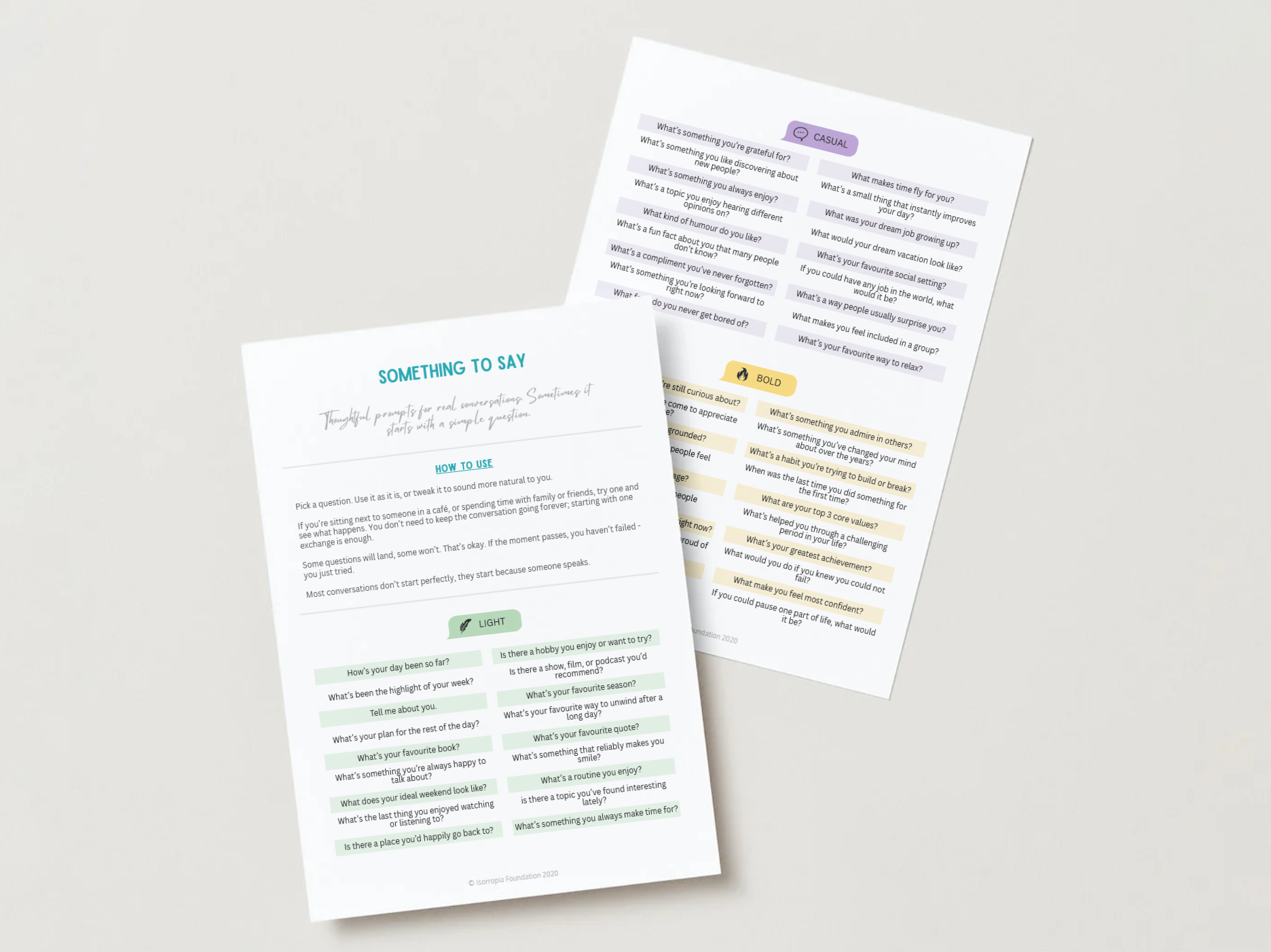
Not sure what to say? Start here.
Sometimes the hardest part of a conversation is knowing how to start.
Something to say… is our FREE conversation-starter PDF, designed to make connecting with others feel a little easier – one conversation at a time.
Creating Safe, Supportive Spaces
Feeling safe enough to talk about mental health makes all the difference. Whether at home, at work, or in the wider community, open conversations are more likely to happen when people trust they’ll be met with empathy rather than judgment.
Creating safe, supportive spaces is something we all contribute to – through small actions, thoughtful language, and simply being willing to listen. When communities encourage openness and understanding, conversations about mental health start to feel more normal and less daunting.
At Isorropia Foundation, our goal is to foster this culture by providing accessible resources, wellbeing initiatives, and opportunities for connection. By working alongside our community, we aim to help people feel less isolated and more empowered to reach out when needed.
A Final Thought
Breaking the stigma around mental health doesn’t require diving into deep conversations from the outset. It begins with connection – everyday chats, shared experiences, and letting people know they matter. These moments can help us feel less alone and, over time, make space for deeper conversations if they’re needed.
This Time to Talk Day (and beyond) let’s keep starting conversations, knowing that each of us has the power to challenge stigma and influence change, one conversation at a time.